The back story
Lanterns, looms and a design district: shopping in Marrakech, the back story
The souks’ trade lanes, the carpet museum, Sidi Ghanem’s studios, Rue Majorelle and the malls.

Photo Credit
Image courtesy of © Petar Milošević · CC BY-SA 4.0 via Wikimedia CommonsFor centuries every trade in Marrakech had its lane, and many still do: cloth in Semmarine, spice in Rahba Kedima, lanterns among the metalworkers. Around that old map the city has added a design district in a former industrial zone, concept stores by the Majorelle garden and air-conditioned malls. Here is the back story, and the way to shop it well.
The Regional Tourism Council calls the souks of Marrakech a veritable mosaic of crafts, and the image is exact: each tile is a trade. Until little more than a century ago, it notes, the city’s whole commercial life lay inside the medina walls, and the lanes north of Jemaa el-Fna still read like a guild register. A souk is a directory you can walk through.
A street map of trades
Souk Semmarine, once the market for fabrics and woollen yarn, still sells furnishing fabrics and traditional clothing, and its kissariat hang caftans, djellabas and jabadors. In the dyers’ souk, wool and silk threads go into great vats; at the Zerbia souk, weaving auctions are still held; Souk Elghzel, the old wool market, has become a meeting place for women artisans, many working in cooperatives.
The council’s route continues to the spice sellers of Rahba Kedima and Souk el Attarine, to Souk Smata for babouches, to the leather of Souk el Kebir and Souk Cherratin, and to Souk Chouari and Souk Haddadine, where blacksmiths and metalworkers make the wrought-iron lanterns. Its crafts guide adds the carved and painted cedar called zouaq, which also adorns the Saadian Tombs and the Bahia.
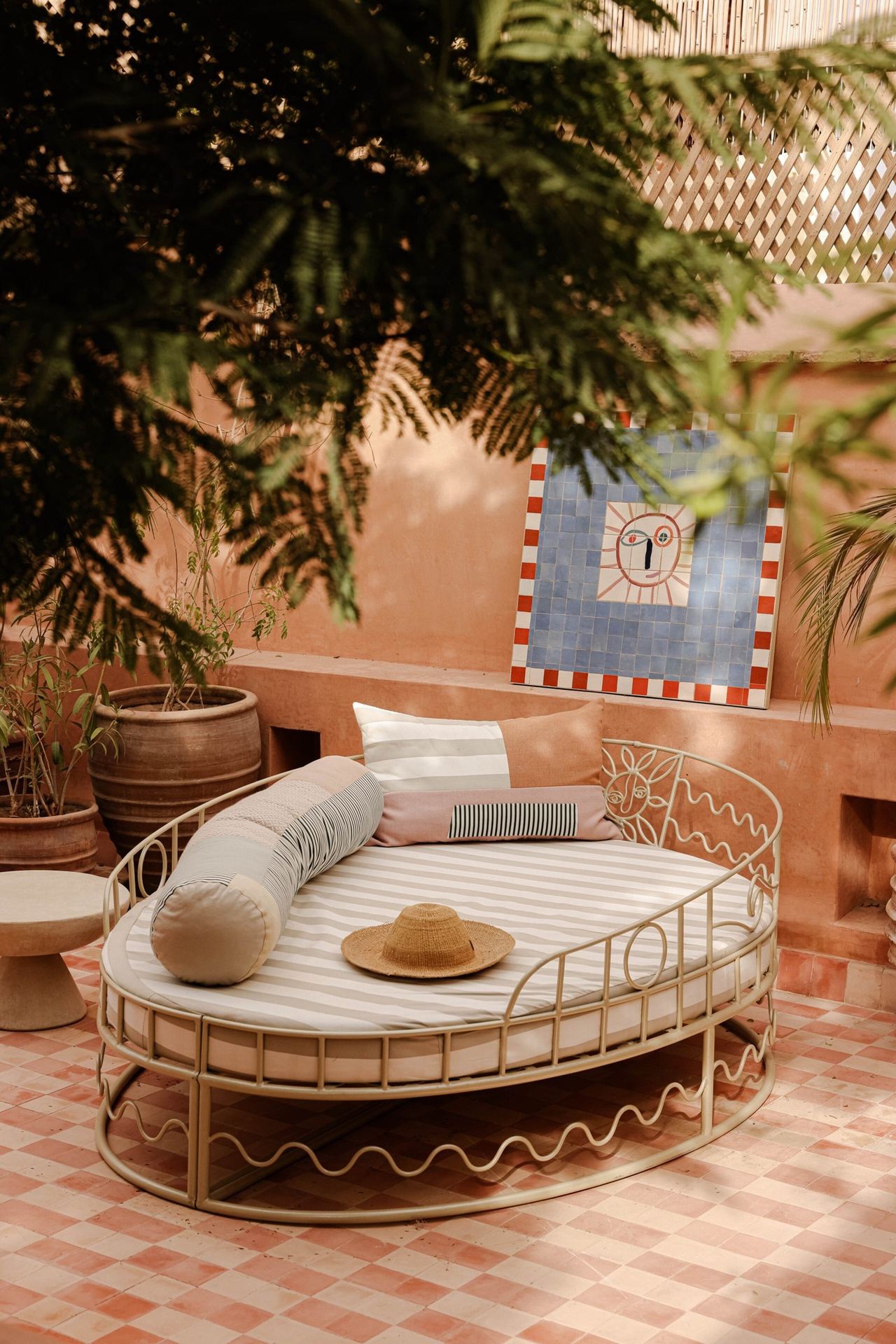
Photo Credit
Image courtesy of © RosemaryBeyond the lanes, the council sends you to the Potters’ Hill, where generations of artisans have shaped everything from everyday pottery to decorative pieces, and reminds you that the city’s metalworkers make silver jewellery and copper lanterns as well as wrought iron. The souk, in other words, is only the shop window; the workshops are the factory floor.

Photo Credit
Image courtesy of © Petar Milošević · CC BY-SA 4.0 via Wikimedia CommonsBefore you buy a carpet
Weaving here, the council says, is a heritage thousands of years old, its patterns tied to the Berber tribes. Before you buy, see the real thing at Dar Si Saïd, a palatial house built in the second half of the nineteenth century and now the national museum of weaving and carpets, run by the Fondation Nationale des Musées. Twenty minutes there will sharpen your eye for the rest of the week.
The design district
Sidi Ghanem, an industrial zone on the city’s edge, has in less than ten years become a destination for decoration, design and galleries, the council notes, because makers could put workshop and showroom under one roof. LRNCE is its best-known resident: the Belgian designer Laurence Leenaert founded it in 2013, and it now works with more than 40 artisans on ceramics, textiles, ready-to-wear and homeware.
A souk is a directory you can walk through.
LRNCE also designed every inch of Rosemary, a riad at 25 Rue de la Bahia, and made carved cedar doors for it: a shop you can sleep in, if you book. Its studio and shop at Sidi Ghanem open Monday to Saturday.

Photo Credit
Image courtesy of © C messier · CC BY-SA 4.0 via Wikimedia CommonsRue Majorelle and the malls
Opposite the Jardin Majorelle, 33 Rue Majorelle is a gallery and concept store for up-and-coming Moroccan brands, from caftans and gandouras to babouches, tableware and lamps. Norya Ayron, whose designs set out to modernise the abaya, has boutiques at 17 Rue Tariq Bnou Ziad in Gueliz and in the medina.
For air conditioning and international labels, Menara Mall on Avenue Mohammed VI gathers more than 90 brands, more than 17 restaurants and cafés, and Le Souk Al Madinah, a hall of Moroccan crafts; its shops open daily from 10am to 10pm. Almazar, on the Route de l’Ourika in Agdal, opens from 8.30am to 11pm.
Our advice: walk the souks in the morning, see Dar Si Saïd before you buy a rug, ask before you photograph a craftsman, as the British government advises for any portrait, and spend your last dirhams before you fly: the currency is closed and hard to change abroad.
Why it's on our list
- A street map of trades
- Before you buy a carpet
- The design district
- Rue Majorelle and the malls
Location
The map comes from Google Maps, which sets its own cookies once it loads.
More in depth
 The back storyBuying in Marrakech: riads, villas and the notaryHow a foreigner buys property in Morocco.
 The back storyGetting around Marrakech: on foot, by taxi, train and coachThe airport, petits taxis, trains north and coaches.
 Coming soonComing soon: the tech the makers have promisedOfficially announced tech, from Gemini glasses to Meta's VR specs, plus the newest arrivals.